Combustion Inc. — Content as a Growth Engine
How organic content improved paid media efficiency by 34% at scale
Anchor long-form content launch — set the benchmark for audience and conversion content
Challenge
Combustion is a science-led, founder-driven brand where growth historically relied on paid media. As ad spend scaled past $130K/month, efficiency plateaued — paid ads were being asked to both explain and convert simultaneously, with no educational content building trust upstream.
Long-form content strategy — driving DTC growth beyond bottom-funnel advertising
My Role
Fractional Creative & Brand Lead — brought in to determine whether creative direction applied to organic content could materially improve growth efficiency.
Led production for long-form, science-led educational content
Partnered directly with the founder on narrative framing and formats
Aligned organic storytelling with paid media, email, and community growth
What I Built
A unified content system where organic and paid worked as one engine, not separate channels.
Consistent YouTube content: science-led storytelling building trust and understanding
Short-form social reinforcing long-form narratives and driving discovery
Tight paid/organic alignment between messaging and creative
Performance feedback loops: content data directly informing media strategy
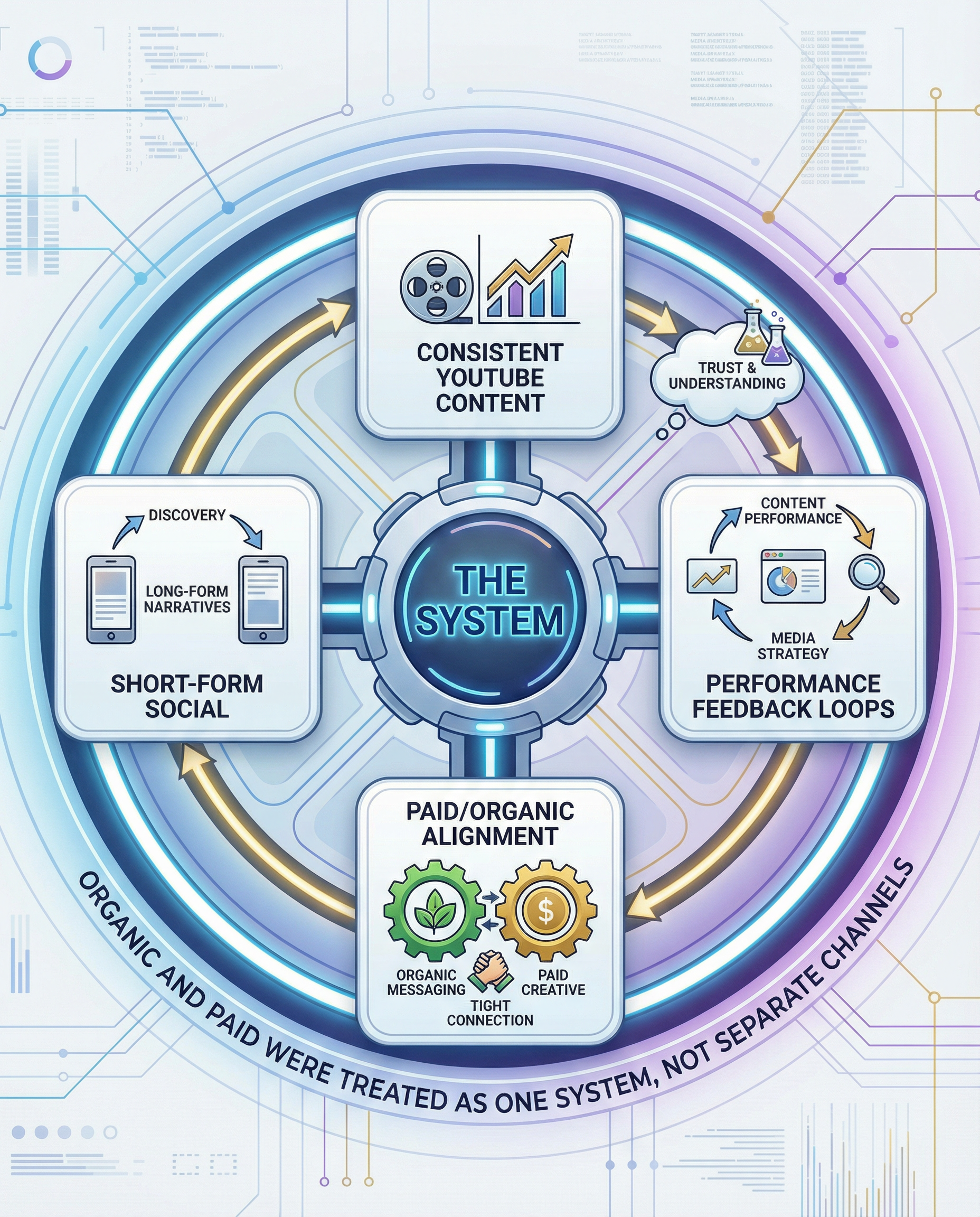
Long-form content flywheel integrated — DTC growth integration
Results

YouTube analytics dashboard — Q4 organic content driving 40% YoY revenue growth
34% paid media efficiency lift when paired with strong organic content
40% YoY revenue growth, Q4 2025
200K+ new YouTube subscribers in 3 months
$716K direct revenue from organic channels on $250K investment (2.9x ROAS)
20% AOV increase; 53% new customer acquisition
Dec 2025: 6.8M YouTube views + 4.79x aMER on $239K ad spend (vs. 3.06x aMER the prior year)
The Takeaway
Content systems change unit economics. When organic educates first, paid media scales further, more efficiently, and with less risk — turning content from a cost center into infrastructure.

Results summary